Japan Travel: Japanese Treats at Temples and Shrines

I wanted to highlight some of the mysterious snacks and treats you may see when you are looking at food stalls nearby a temple or shrine. You won’t necessarily find all of these at a particular temple or shrine, but usually you will find some. This is not a full list- just my personal favorite Japanese Treats at Temples and Shrines.

The big motherlode is at Sensoji Temple in Asakusa, an area in Tokyo, because it boasts Nakamise Dori Shopping Street that almost everyone passes through from Kaminarimon Gate to Hozomon Gate to get to the actual main hall and other buildings. Another great area to look is in Kyoto, in the Higashiyama shopping street between Yasaka Shrine or Kodaji Temple and Kiyomizudera Temple,  also called Sannenzaka and Ninenzaka.

Dango

Dango is a doughy ball served on skewers. In most cases, the dango are each chewy like mochi usually brushed with a sweet sauce. They are usually slightly smaller than the size of a ping pong ball. There are multiple dango balls on a skewer. In some cases the dango are all the same, but there are also multi-colored pink white and green ball that may appear all on a stick too. I’ve also had a black one which was made with black sesame, a Mount Takao specialty.
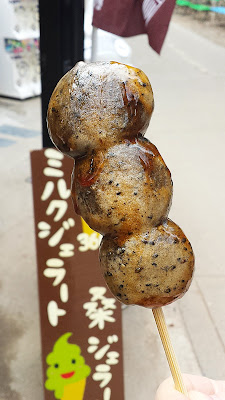
Black Sesame Dango, a Mount Takao specialty

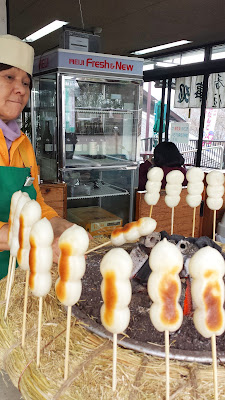
In most cases the dango are also warmed slightly by a charcoal fire or grill so that parts of it are crisped up a little but on the outside on one side. It may be a modest fire like these
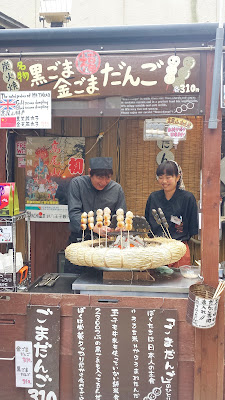
Getting a little crisp edge to the dango, a chewy Japanese dumpling and sweet made from mochiko (rice flour) that are served skewered at a Mount Takao stand Getting a little crisp edge to the dango, a chewy Japanese dumpling and sweet made from mochiko (rice flour) that are served skewered at a Mount Takao stand

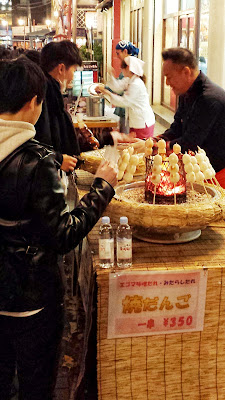
Or in the evening a little bit more dramatic with the flames.
Dango stand near Sensoji Temple, this stand was on a side street Dango stand near Sensoji Temple, this stand was on a side street

They are usually plain when they are skewered by the fire, and then when you order a skewer, get the sauce brushed on and may get a quick extra warmed up closer to the heat for a few moments to glaze it slightly.
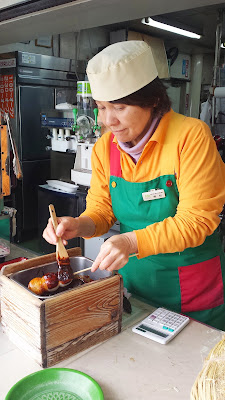
Brushing the sauce on dango, a chewy Japanese dumpling and sweet made from mochiko (rice flour) that are usually serve skewered at a Mount Takao stand

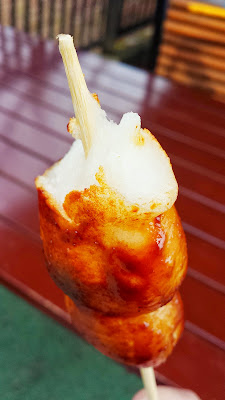
They are usually very chewy and have a napkin to wipe your face since the sauce may got on it!

Chewy saucy dango, a Japanese dumpling made from mochiko (rice flour) on a skewer. This was almost like a sweet bbq sauce from a Mount Takao stand Chewy saucy dango, a Japanese dumpling made from mochiko (rice flour) on a skewer. This was almost like a sweet bbq sauce from a Mount Takao stand

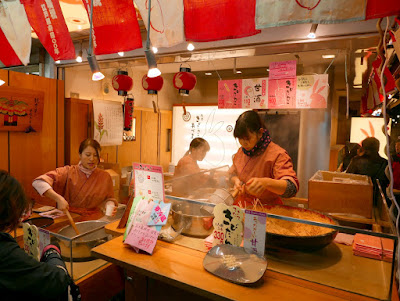
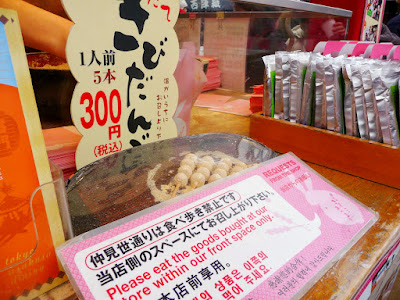
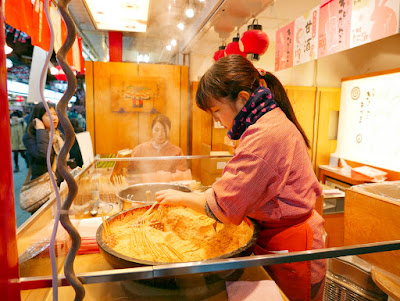
There is one exception to this, which I have found on Nakamise at Sensoji. You’ll recognize this famous stand by the pink and bunny theme. Even though this is an exception, I always top and get it. Here, the dango are much smaller, more the size of marbles. This is Kibi-dango, a variation of dango made with millet flour. From this same stand you can enjoy with warm sake called Amazake that is very sweet and low alcohol. Here, I caught a few photos of the ladies rolling the kibi dango in the flour. Afterwards, since the flour is still a bit loose they serve the dango in a pink envelope with the white bunny logo on it. I highly recommend with Kibi dango to have it with a beverage as the flour coating instead of a sauce makes it more dry.
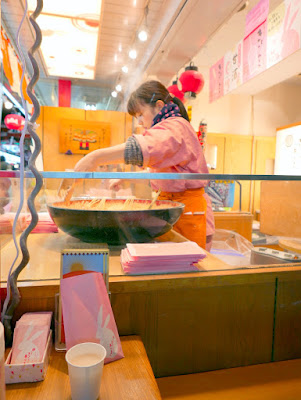
Kibi-dango is a variation of dango made with millet flour, which here you can enjoy with warm sake called Amazake that is sweet and low alchohol from the same store on Nakamise Shopping Street at Sensoji Temple in Asakusa Kibi-dango is a variation of dango made with millet flour, which here you can enjoy with warm sake called Amazake that is sweet and low alcohol from the same store on Nakamise Shopping Street at Sensoji Temple in Asakusa Kibi-dango is a variation of dango made with millet flour, which here you can enjoy with warm sake called Amazake that is sweet and low alcohol from the same store on Nakamise Shopping Street at Sensoji Temple in Asakusa Kibi-dango is a variation of dango made with millet flour, which here you can enjoy with warm sake called Amazake that is sweet and low alchohol from the same store on Nakamise Shopping Street at Sensoji Temple in Asakusa

Ningyo Yaki

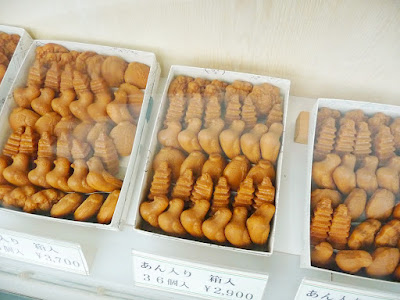
Ningyo Yaki is a cake filled with sweet red bean paste. You will often see it in the shape of various buildings or animals.
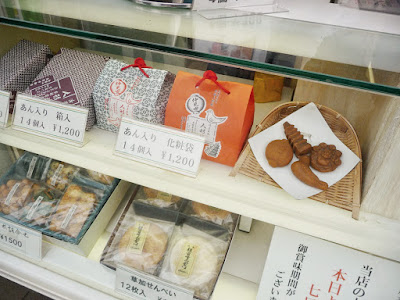
ningyo-yaki (red bean-filled buns moulded into various shapes using iron pans over a fire) in varoius shapes! ningyo-yaki (red bean-filled buns moulded into various shapes using iron pans over a fire) in varoius shapes!

If you are lucky, you will see it being made fresh, either with an iron mold pan by hand, or by an automated machine!

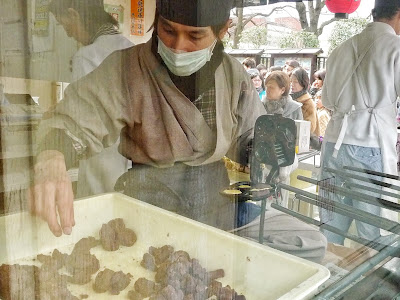
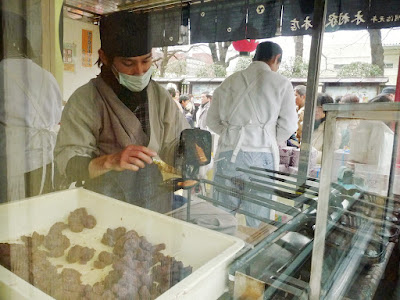
By hand with a mold pan (at Sensoji Temple) – the man will first pour in the dough, add the bean, and then pour more dough on top and then place the mold on the small flames- he was super fast! You can see all the molds he is working with on the right as they are cooking to the right.:
Making Ningyo Yaki (red bean filled busn molde dinto varoius shapes using iron pans ove ra fire) - the man will first pour in the dough, add the bean, and then pour more dough on top and then place the mold on the small flames- he was super fast! Making Ningyo Yaki (red bean filled busn molde dinto varoius shapes using iron pans ove ra fire) - the man will first pour in the dough, add the bean, and then pour more dough on top and then place the mold on the small flames- he was super fast!

Automated (at Himeji Castle):

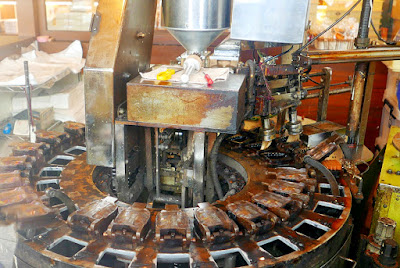
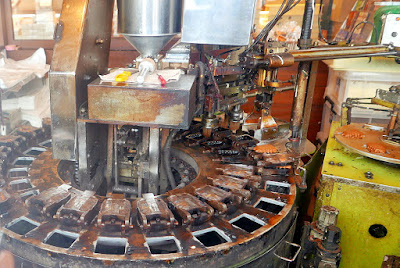
At this particular machine (I won’t tell you how long I stood at the window, just fascinated each time I come across these…) there are two brushes on the right side of the machine that brush the inside of the molds – each mold’s side gets brushed. Then as it turns counterclockwise, the molds get dough squirted into it, then the sweet bean pellet is added. I couldn’t see all the way around so I’m not sure if then there is a second squirt of dough to cover the sweet bean before the mold is closed.
Automated Ningyo Yaki Machine. On the right side, you can see two pipes that brush the inside of the mold, and then the machine will squeeze the dough into the molds, On the other side the bean is then added, and more dough on top then the molds continue to circle, cooking it on one side until it is flipped by that lever you see on the right to cook on the other side! It ticks more counterclockwise until it gets to the lever on the right which will open and dump out the ningyo yaki

What I do know is then it clicks forward counterclockwise until the mold reaches a lever on the left side, around the 8 o’clock mark. Then, the lever flips the mold over to cook on the other side until around the 3 o’clock mark in the machine, a lever opens the mold and then a claw retrieves the hot now fully cooked cake.
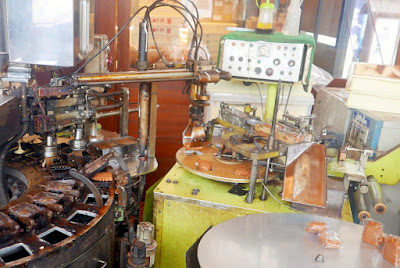
In this ningyo yaki machine, it automatically does the entire process in an automated fashion. The crane carries the cooked cake to the machine on this right side to cool and get packaged down the little slide of plastic you see. On the left you can see the brushing inside the mold and then the squeezing of dough to the left of that

Then, the claw drops it perfectly each time into a new smaller machine that times the cooling of the cake and then slides it into plastic to be individually wrapped.
Automated ningyo yaki machine. The crane on the right side carries the cooked cake to the machine on this right side to cool and get packaged down the little slide of plastic you see. On the left you can see the brushing inside the mold and then the squeezing of dough to the left of that

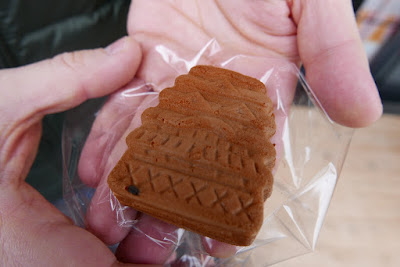
Since these photos were taken by Himeji (a famous Japanese castle), no surprise that the ningyo yaki looks like a mini castle! When we purchased this, the man ran around the machine to give us a fresh, still warm one.
Himeji Castle shaped Ningyo Yaki - Ningyo Yaki is a cake filled with sweet red bean paste. You will often see it in the shape of various buildings or animals.

Manju

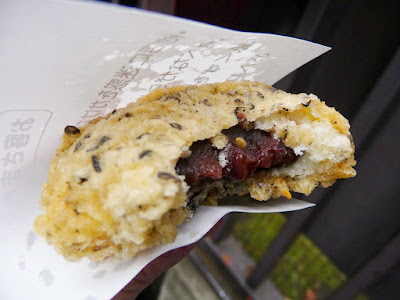
Manju is a batter (usually flour, rice powder and buckwheat) stuffed with some sort of filling (usually sweet red bean paste of boiled azuki beans and sugar). At Nakamise Dori, I was surprised to find more creative fillings, such as cherry, custard, pumpkin, sweet potato, green tea and more. Below, I got a Sesame Manju.
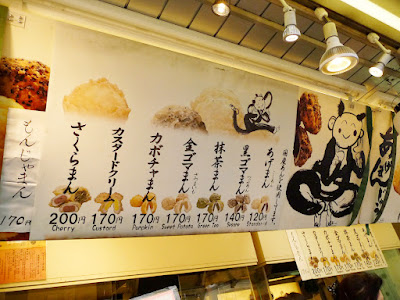
Manjū (饅頭?) is a popular traditional Japanese confection. There are many varieties of manjū, but most have an outside made from flour, rice powder and buckwheat and a filling of an red bean paste, made from boiled azuki beans and sugar. This stand at Nakamise Dori has many creative fillings beyond just sweet red bean Manjū (饅頭?) is a popular traditional Japanese confection. There are many varieties of manjū, but most have an outside made from flour, rice powder and buckwheat and a filling of red bean paste made from boiled azuki beans and sugar.

Nikuman

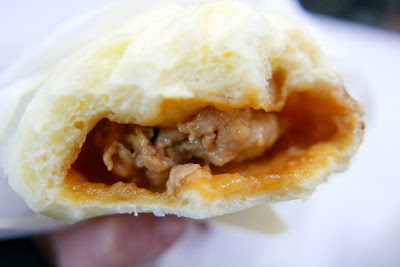
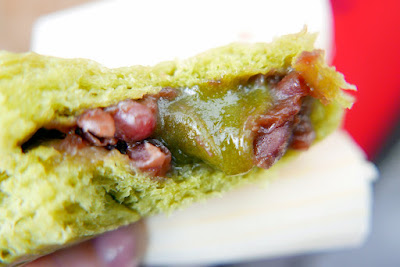
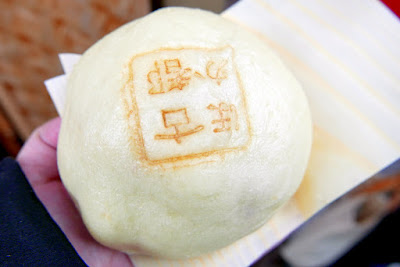
Nikuman is a smaller version of Chinese buns. They are steamed, and may be filled with meat or other fillings. They are served quite hot, often right out of the steamer, so definitely be carefully biting into it – the floury doughy soft bun may seem warm, but the inside can be piping hot.
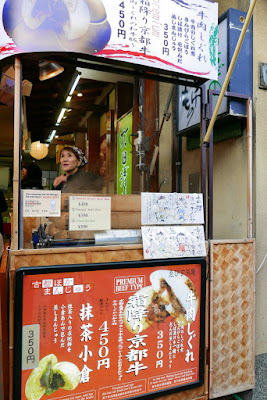
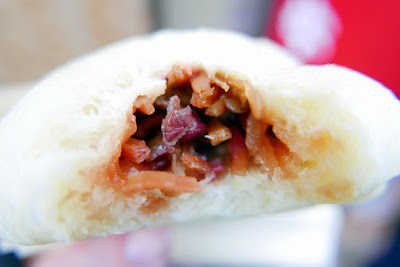
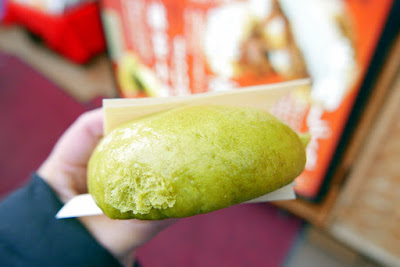
The many snacks being made fresh that you can purchase while walking in the Higashiyama District - we stopped for these Nikuman, or steamed buns because there is a beef burdock one and also a bean green tea vegetarian one The many snacks being made fresh that you can purchase while walking in the Higashiyama District - we stopped for these Nikuman, or steamed buns because there is a beef burdock one and also a bean green tea vegetarian one

You will probably recognize it by the wooden steamer trays stacked on top of each other
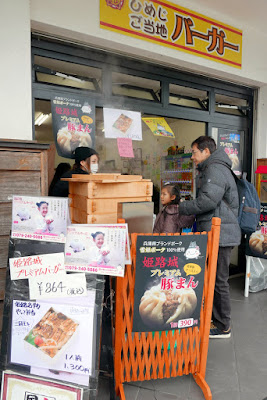
Nikuman - steamed bun filled with meat and/or other ingedients. This beefy one was juicy by Himeji Castle Nikuman

For instance, I found these in the Higashiyama District – we stopped for these buns because there is a beef and burdock one and also a bean and green tea vegetarian one!
The many snacks being made fresh that you can purchase while walking in the Higashiyama District - beef and burdock one The many snacks being made fresh that you can purchase while walking in the Higashiyama District - beef and burdock The many snacks being made fresh that you can purchase while walking in the Higashiyama District - bean green tea vegetarian one The many snacks being made fresh that you can purchase while walking in the Higashiyama District - bean green tea vegetarian one

Menchi Katsu

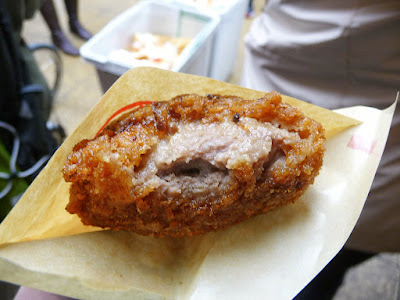
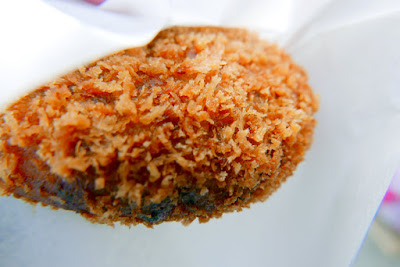
Menchi Katsu is a breaded and deep fried cutlet or croquette, usually meat but it could be another protein (in Kyoto we had the vegetarian options of potato or tofu skin).

This meat one below shown from near Sensoji Temple at the stand Asakusa Menchi (you will probably recognize it first by the line) is the best version I’ve ever had, famous for being particularly juicy / greasy depending on your point of view and they use a rare breed pork called Kouza-buta (Kouza pork) from Kanagawa.
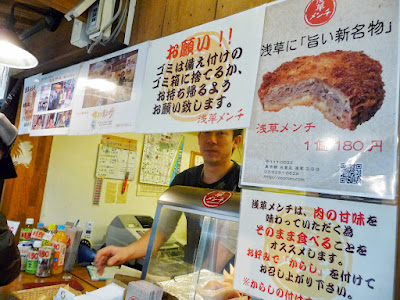
In line for famous Asamen's Menchi Katsu, a breaded and depe fried cutlet or croquette Very juicy and flavorful fried pork thing - apparently Menchi Katsu, a deep fried breaded cutlet - found at Asakusa, near Sensoji Temple

I also found some while walking in Higashiyama shopping street towards Kiyomizudera Temple in Kyoto- they had filling options of Kobe beef, soy milk skin cream, and Japanese potato croquette.
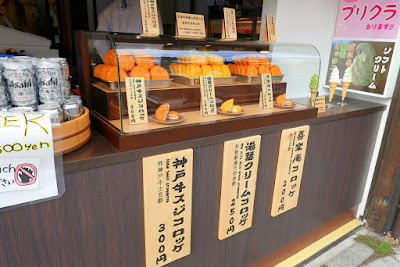
As a snack in the Higashiyama District, we purchased some croquettes to energize us for our uphill walk to the temple - they had kobe beef, soy milk skin cream, and Japanese potato croquette As a snack in the Higashiyama District, we purchased some croquettes to energize us for our uphill walk to the temple - they had kobe beef, soy milk skin cream, and Japanese potato croquette

Senbei

Senbei are Japanese rice crackers. There are a huge variety of senbei out there – some are sweet, salty, spicy, or savory, in all sorts of shapes and sizes and flavors. They are usually baked or grilled over charcoal. The mnst common ones you see are round, and may have a little square piece of seaweed wrapped around it and be shiny from a soy sauce glaze.

What has made senbei probably most famous is that they sell them to feed the deer at Nara. There is even a place where they throw large senbei like frisbee and the nburn down a mountain!?? Japan Talk has a webpage listing some interesting senbei trivia.

I admit I don’t necessarily seek out senbei because it makes me thirsty, and that makes me drink, and then I might have to use a public toilet and who knows if it will be the nice ones with buttons or a squat one (although at least unlike China they provide a nice handle on the wall to keep your balance). But I wanted to highlight an interesting one I found in Kyoto, on Higashiyama just across from the entrance to the Kodaji Temple. It was the aroma and seeing them being made fresh that caught my attention. Fresh senbei is always superior to packaged ones.
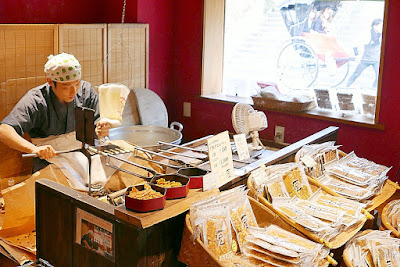
Senbei store where we observed it being made fresh in Higashiyama District. This senbei has been produced since 1864 and is still hand baked the exact same way. These are different in that they utilize broad bean, wheat, flour and an egg.

This one, according to a helpful English index card in the window, has been produced since 1864 and is still hand baked the exact same way. These are different in that they utilize broad bean, wheat, flour and an egg. The craftsman was super cheerful and welcoming even as he kept working the whole time. He uses those bags to pie in dough, but that rectangle in front of him is an oven full of broad beans that are being roasted – you an see some of the beans there on the cloth and paper in front of him. He scoops the beans from the big pot to his left and into drawers of the oven. Senbei store where we observed it being made fresh in Higashiyama District. This senbei has been produced since 1864 and is still hand baked the exact same way. These are different in that they utilize broad bean, wheat, flour and an egg.

We sampled all the different kinds and the bag we bought did not make it out of Japan because we ate it all.
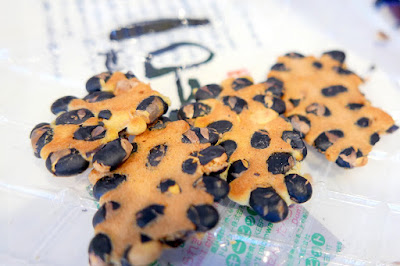
Kyoto Senbei made with broad bean

Amazake

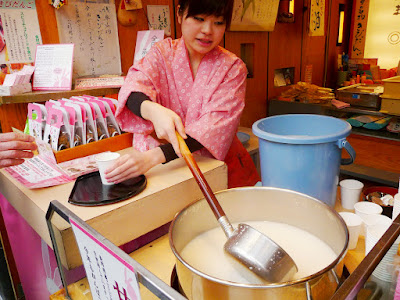
Amazake is a sweet warmed sake. It is made out of fermented rice and Koji (a special cultured rice – it’s bringing the important fungus that will break down the carb of the rice to sugars) so the sweetness comes naturally, not from any sugar.
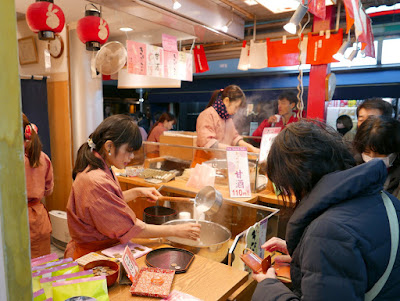
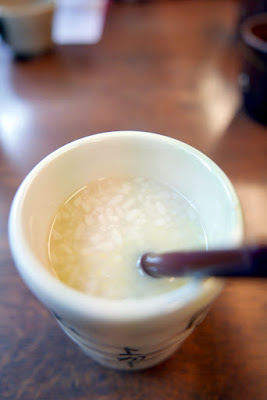
Amazake that is sweet and low alcohol from the same store on Nakamise Shopping Street at Sensoji Temple in Asakusa Amazake that is sweet and low alcohol from the same store on Nakamise Shopping Street at Sensoji Temple in Asakusa

It is poured from the pot where it is still kept warm.
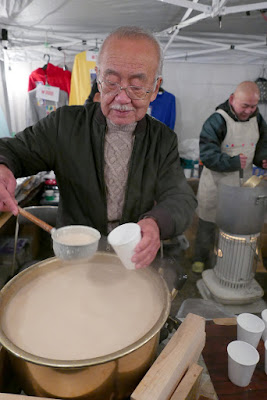
="Amazake

The texture is almost like an almond milk. There may be a lot or just a little of the rice left in the beverage.
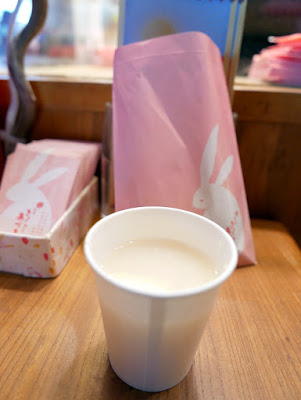
 Amazake that is sweet and low alcohol from the same store on Nakamise Shopping Street at Sensoji Temple in Asakusa Amazake by Kiyomizudera Temple's fountains

It might be made out of white rice, brown rice, or even black sesame (which I found as a specialty at Mount Takao). It is low in alcohol, so even kids drink it. When it’s chilly out, it’s a nice warm drink that is more substantial than just tea.
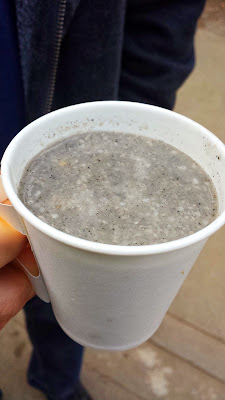
Black Sesame Amazake at Mount Takao

Which of these treats caught your eye as something you would stop for? Have you had any of these before? Is there a Japanese Temple or Shrine snack I missed?

Here’s a summary of my Japan Travel post series:

Signature

Recipe for a Vegetarian Lentil Salad with Roasted Oranges and Radicchio

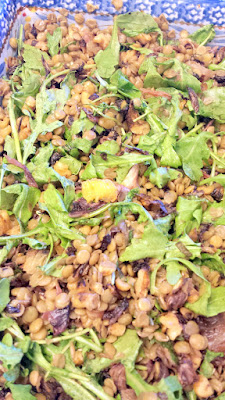
This recipe for a Vegetarian Lentil Salad with Roasted Oranges and Radicchio is healthy and hearty, offering you lots of fiber and protein while also feeling satisfying. This salad leans much more on lentils than the greens, so if you’d like you could serve this on a bed of more arugula or other greens to make it a whole meal.
Recipe for a Vegetarian Lentil Salad with Roasted Oranges and Radicchio

You can serve this warm – I don’t know about you but although I want to eat my greens, with the colder weather I also crave something warm, so this dish offers the best of both worlds.
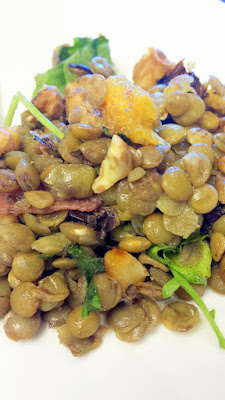
Vegetarian lentil salad with roasted orange and radicchio, toasted nuts and mint and arugula

My version here was inspired by the recipe from the Vegetarian Times, although my version omits the shallots and increases the amount of lentils, walnuts, and adds in the handful of arugula. The oranges and orange juice add a bit of sweetness as well as acidity, while the toasted walnuts provide the nuttiness and crunchy textures now and then, both which balance out the lentils and arugula.

Ingredients:

  • 4 oranges
  • 1 head of radicchio
    Head of radicchio
  • Olive Oil – you will be using two tablespoons, first to roast and later as part of the dressing
  • 1 1/2 cup French lentils, rinsed
  • 1 1/2 cup orange juice
  • 1 cup toasted walnuts –  I toast them in a pan on the stove with a spritz of cooking spray butter whole, and then break them up later after the toasting
    Toasted Walnuts - I toast them in a pan with a spritz of cooking spray butter whole, and then break them up later after the toasting
  • 2 tablespoons of chopped mint
  • A handful of arugula (about 1 1/2 cups)

Directions:

  1. The most prep work will be for the roasted oranges and radicchio. Preheat the oven to 400 degrees F. Cover a baking sheet with foil or parchment paper to prepare to roasted vegetables and fruits. You will need to thinly slice the radicchio into strips that you will be roasting with the oranges – think about the size you would see shredded into a a taco or salad. This should yield 4-6 cups of shredded radicchio.
  2. For the oranges, after peeling them, you want to cut them into sections so they are in wedges (think like chocolate oranges, but with a real orange) but remove the membrane. Squeeze the empty membranes into the same bowl you are placing the orange wedges to collect any extra fresh juice.
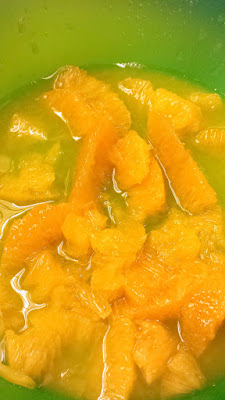
    The hardest part is removing the wedges of orange from the membrane for this Recipe for a Vegetarian Lentil Salad with Roasted Oranges and Radicchio
  3. You will want to toss the shredded radicchio into your orange bowl, and then add one tablespoon of olive oil and toss all together. Arrange all in a single layer on the baking sheet and let roast for 15 minutes or so in the oven. Stir the radicchio and oranges so it will roast the other side, and roast for another 10 minutes or so until the oranges are caramelized.
    Roast the orange wedges and the radicchio in a single layer on a baking sheet in this Recipe for a Vegetarian Lentil Salad with Roasted Oranges and Radicchio Roast the orange wedges and the radicchio in a single layer on a baking sheet in this Recipe for a Vegetarian Lentil Salad with Roasted Oranges and Radicchio
  4. While the oranges and radicchio are roasting, boil a pot of the 1 1/12 cup of French lentils in 2 1/4 cups of water mixed with 1 1/2 cups of orange juice. Once it comes to a boil, lower to heat to medium-low and let simmer for 30 minutes or so until the lentils are done.  Drain lentils and place into your serving dish, but keep the cooking liquid.
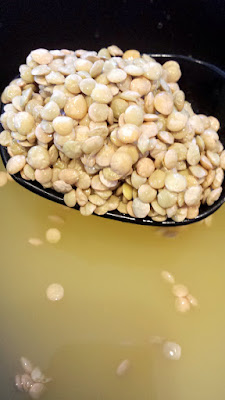
    Cook the lentils in a water and orange juice liquid for this Recipe for a Vegetarian Lentil Salad with Roasted Oranges and Radicchio
  5. In the pot with the remaining lentil cooking liquid to saucepan, and simmer over medium heat if necessary until reduced to 1/4 cup. Pour over lentils.
    The cooked lentil is refreshed with a bit of the reduced cooking liquid (water and orange juice) after being drained after cooking
  6. When the orange and radicchio are finished roasting, add those to your lentils, and add in the last tablespoon of olive oil, the cup of toasted walnuts, 2 tablespoons of fresh mint, and a healthy handful of the arugula. Mix everything together. Depending on how it tastes, you may want to add a touch of sea salt and ground pepper to your liking.
    Mix together the olive oil with the orange juice water lentils, roasted oranges and radicchio, toasted walnuts, and chopped mint

Are you a fan of lentils? What’s your favorite way to enjoy lentils?
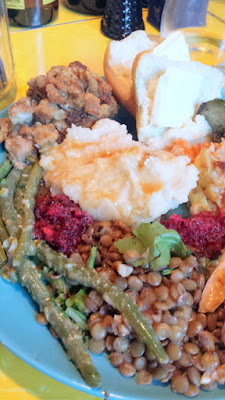
The Vegetarian Lentil Salad with Roasted Oranges and Radicchio as part of the food spread Vegetarian lentil salad with roasted orange and radicchio, toasted nuts and mint and arugula

As for me, I served this as a side dish during Thanksgiving – they were great mixed in with the cranberry sauce and the mashed potatoes!
The Vegetarian Lentil Salad with Roasted Oranges and Radicchio as part of the Thanksgiving day spread, great with the mashed potatoes and cranberry sauces The Vegetarian Lentil Salad with Roasted Oranges and Radicchio as part of the Thanksgiving day spread, great with the mashed potatoes and cranberry sauces

Signature

Portland Drink and a Bite Highlight: Higgins Portland

For Foodie Friday today, I continue my new series highlighting a Portland Drink and a Bite of food that I think not only is best in class within Portland, but is a classic representation of the character of Portland. Of course, that Portland Drink and a Bite Highlight is also delicious, and unique.

My pick this week is Higgins Portland. Higgins Restaurant and Bar is one of those classic Pacific Northwest cuisine restaurants that changes its menu weekly to reflect what is the best in local products for not only the season but for the week. There are many restaurants and even food carts in Portland now that take advantage of the best ingredients from the farmers and producers locally here, but Higgins has been doing so for more than 20 years, and promoted this responsibility and represented Oregon worldwide.

Chef Greg Higgins (2002 James Beard award as Best Chef in the Northwest) and the Higgins Restaurant and Bar philosophy strongly sources not only local ingredients, but focuses in supporting on local small farms, organic, and sustainable agriculture practices. Higgins believes not only in delicious food on the table, but stewardship of our soil, water and air.

Higgins’ premise is “food is community – an idea that creates respect, commitment and responsibility from farmer to chef to diner.”  (See more at the Higgins website. There is also a wonderful profile for the Higgins 20th anniversary at Oregon Live.).

It’s no wonder than that when visitors to Portland ask where they can try Pacific Northwest cuisine, Higgins is always on my list of recommendations. Higgins is a white tablecloth restaurant that is perfect for a business lunch or a classy meal of lunch or dinner.

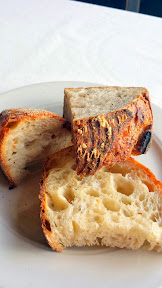
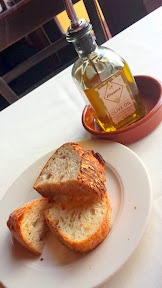
You notice the focus on celebrating freshness and the best ingredients right away with even the complimentary bread service, which comes with perfect bread- crusty crunchy on the outside, soft and doughy on the inside- that you can enjoy with organic extra virgin olive oil.
Higgins Restaurant bread service, which comes with perfect bread- crusty crunchy on the outside, soft and doughy on the inside- that you can enjoy with organic extra virgin olive oil

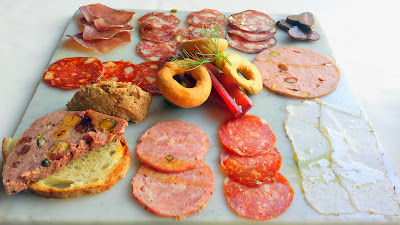
Try to start with the famous Charcuterie Board of artisanal cured meats and pickles. It’s justifiably reknown – it superb in offering an array of flavors and textures upon its giant marble board, as what you would expect when you hear Chef Greg Higgins has loved charcuterie since he was a boy and has books in his library on charcuterie that daties even to the 17th and 18th centuries.

Higgins Portland Restaurant- Charcuterie board of artisanal cured meats and pickles

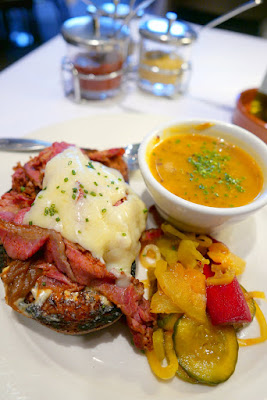
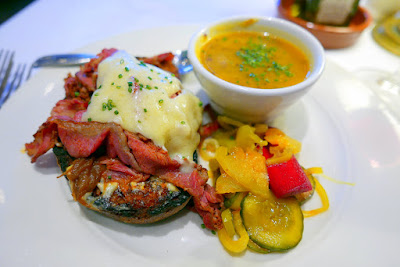
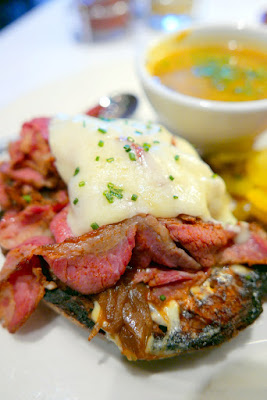
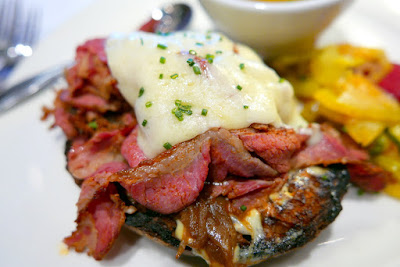
The specific bite I want to highlight for this Portland Drink and a Bite though is the Higgins Lunch and Bistro menu option of the Open-faced sandwich of pastrami, grilled onions & sharp white cheddar. Here I substituted the salad with their daily soup, a butternut squash with quinoa that day.
Higgins Lunch and Bistro menu option of the Open-faced sandwich of pastrami, grilled onions & sharp white cheddar - here I substituted the salad with their daily soup, a butternut squash with quinoa Higgins Portland Lunch and Bistro menu option of the Open-faced sandwich of pastrami, grilled onions & sharp white cheddar - here I substituted the salad with their daily soup, a butternut squash with quinoa

I think it’s the best pastrami in Portland.
Higgins Portland Lunch and Bistro menu option of the Open-faced sandwich of pastrami, grilled onions & sharp white cheddar Higgins Portland Lunch and Bistro menu option of the Open-faced sandwich of pastrami, grilled onions & sharp white cheddar

One of the unique things about Higgins is they have on staff not only a wine sommelier, but also a beer steward. You can rest easy ordering any beverage here because all the picks are wonderful at this Portland institution. Instead of a specific cocktail, I urge you to use your best judgement based on what is on the list. In particular I love the wine by the glass list here in highlighting producers I may not have heard of before locally.
Higgins, Portland - menu and a lovely glass of red wine, here Waterbrook Melange red blend of 47% Merlot, 18% Cabernet Sauvignon, 15% Syrah, 7% Cabernet Franc, 4% Malbec, 4% Grenache, 2% Sangiovese and 1% each of Mourvedre, Cinsault and Counoise. From Columbia Valley, Washington.

Have you been to Higgins Portland? Have you had the pastrami there? Where do you think is the best pastrami in Portland?

Higgins Menu, Reviews, Photos, Location and Info - Zomato

Signature

Portland Drink and a Bite Highlight: Laurelhurst Market

For Foodie Friday today, I continue my new series highlighting a Portland Drink and a Bite of food that I think not only is best in class within Portland, but is a classic representation of the character of Portland. Of course, that Portland Drink and a Bite Highlight is also delicious, and unique.

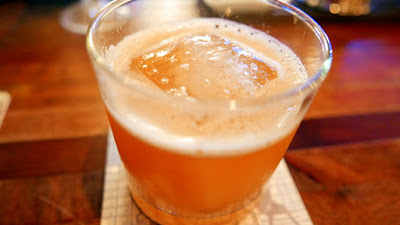
My pick this week is the Smoke Signals cocktail at Laurelhurst Market. This is a famous cocktail highlighted by Portland Monthly back in 2013 but that has been on the menu since 2008. It is comprised of Rye Whiskey, Sherry, Pecan, Lemon, and (super cool!), smoked ice. That’s right, smoked ice, they smoke ice! The smoky nutty whiskey drink is unique and one of my top 5 favorite cocktails in Portland. I can’t go to Laurelhurst without having one.
The famous Laurelhurst Market cocktail of Smoke Signals with Rye Whiskey, Sherry, Pecan, Lemon, Smoked Ice The famous Laurelhurst Market cocktail of Smoke Signals with Rye Whiskey, Sherry, Pecan, Lemon, Smoked Ice

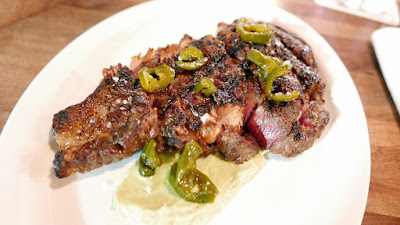
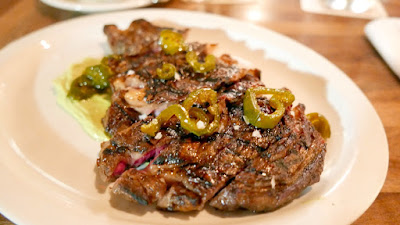
With the illustrious Kevin Ludwig behind the bar though, definitely feel free to expand to other offerings. And then, for the bite at this steakhouse and full service butcher shop helmed by Chef Benjamin Bettinger and Sous Chef Patrick McKee, of course we turn to meat. You can’t go wrong with anything involving beef in this joint, but my favorite is the ribeye (the one pictured below is from a visit where it was served with avocado and pickled jalapenos – the accompaniment varies) which I’ve been having for years and is big enough to share for 2 or is one very manly meaty dinner for one.
Laurelhurst Market Ribeye with Avocado and Pickled Jalapenos Laurelhurst Market Ribeye with Avocado and Pickled Jalapenos

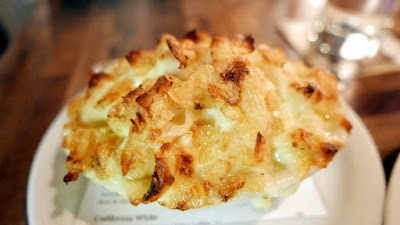
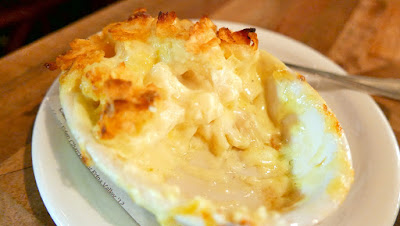
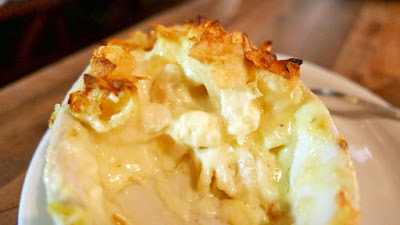
Don’t forget to order that famous side of Mac and Cheese with a Potato Chip Crust! That oozy melty gooeyness…
Laurelhurst Market's side of mac and cheese with a potato chip crust! That oozy melty gooeyness... Laurelhurst Market's side of mac and cheese with a potato chip crust! That oozy melty gooeyness... Laurelhurst Market's side of mac and cheese with a potato chip crust! That oozy melty gooeyness...

Although I realize it’s chilly January, my favorite thing at Laurelhurst Market besides the food and drink is their outside bar that you can enjoy the breeze and setting sunshine along with your steak – something you won’t find at most steakhouses.

Bar at Laurelhurst Market opens up to a patio area. You can also see Bar Tender Kevin Ludwig to the right

And, I love how Laurelhurst Market operates as a neighborhood joint with obvious regulars alongside the bar with me rather than going for the usual fancy feel that appeals to corporate expense accounts. Laurelhurst Market is also open for lunch and dinner everyday, so you don’t have to wait for dinner to get your local meat enjoyment on.

Have you been to Laurelhurst Market, what are your thoughts? What is your favorite Portland steakhouse?

Signature

Guide to Planning A Trip: Mapping

In my previous Guide to Planning a Trip post, I explained how I researched and created a wishlist of what I want to do and eat and organized it in a Google Doc. I mentioned in that post how I organize destinations by area so that I can minimize travel time and make the most of where I am by knowing what my options are in that area, whether or not I actually visit them. Today, I share how I create my custom Google My Maps to help me do this.

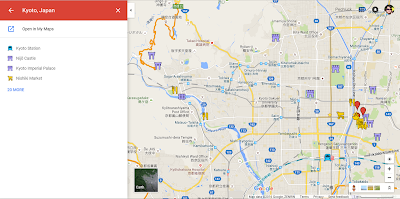
Knowing where various interest points are oriented to each other can help plan your travel – such as below where we did a walking day visiting scenic streets, shrines, temples, and gardens all in Southeastern Kyoto in Japan a few weeks ago.

The My Maps also is super helpful when I’m there, since I can use it to get directions from place to place. Even if I don’t have wireless/data, I can also if I load the custom map before I go offline, use it alongside GPS to help me get to my destination.

It may seem like with a spreadsheet and custom maps, I must have my trips planned to the hour. But, the opposite is true! Because I am armed with information on where everything is located, when each business may open and close, how much each will cost in money or time, what the various options to choose from are among many choices in the area (including ones I find out from locals or discover passing by once I’m there!) and what others may have thought of them from reading reviews, I feel even more empowered to wing it without FOMO.

And, since getting lost stresses me out, or traveling to a location taking longer than I thought only to find out it just closed is so frustrating for me, mapping stuff to find out where it is and how long it takes to get there by train, car, public transit, walking, whatever is important to me.

Guide to Planning A Trip Part 2: Mapping

Did you know you can create a custom map with multiple destinations that you input? You can also share this map!

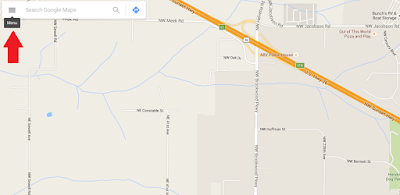
To start, open google maps. In the search bar, you should see a “hamburger” menu icon – it has 3 lines and appears on the left side of the search bar.
Guide to Planning A Trip: Mapping. To create your own Custom google maps, go to the hamburger menu in Google Maps

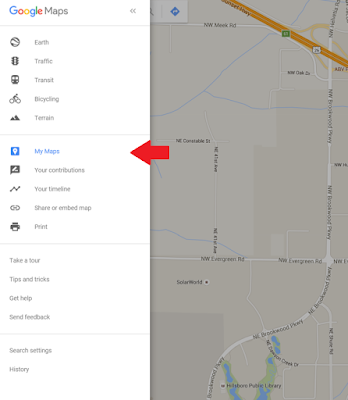
Click on that and click on “My Maps“. If you don’t see My Maps, it may be because you aren’t signed into your Google account – you need to be signed in so the map will associate with you.
Guide to Planning A Trip: Mapping. To create your own Custom google maps, click on My Maps in the Google Maps menu.

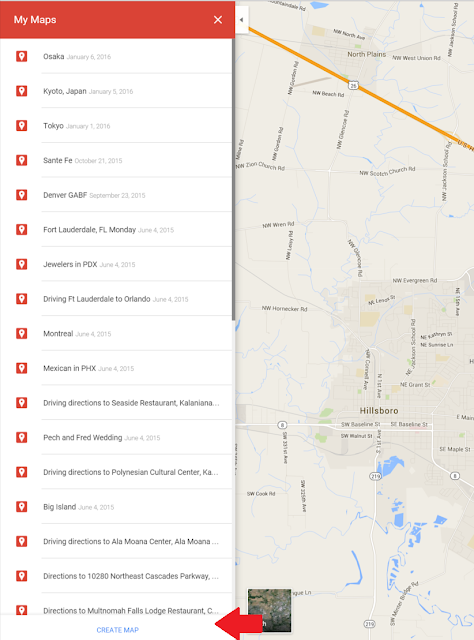
Now I have a lot of maps I have created over the years, but the important thing is to look for the “Create Map” at the bottom. What you can see from this is later – for instance my second trip to Hawaii, I was able to reuse my map to revisit some of my favorite stops later with my family that I had visited earlier! I love that this is an investment in making maps rather than re-doing the searches and directions later.
Guide to Planning A Trip: Mapping. To create your own Custom google maps, click on Create New Map in the Google Maps - My Maps menu.

Later, when you come to edit your maps, you will want to open one of the maps you saved, which will show the screen below. You have one extra step where you then click on “Open in My Maps” in order to edit the existing My Map.
Later edit your maps by clicking on the name of your map, and click on Open in My Maps

While I’m on vacation, I only need to click to load the map on my phone and not use “Open in My Maps” in order to use it to navigate with GPS.

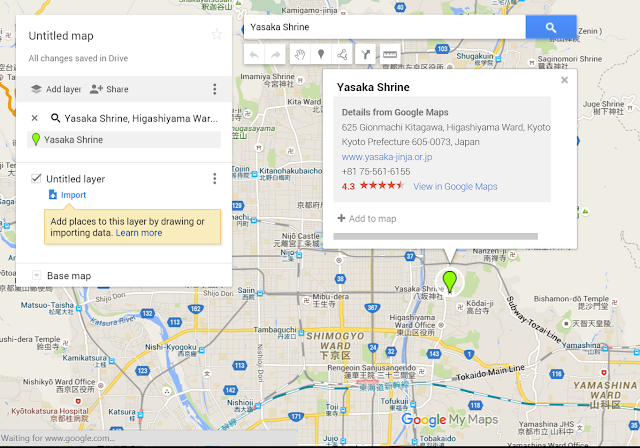
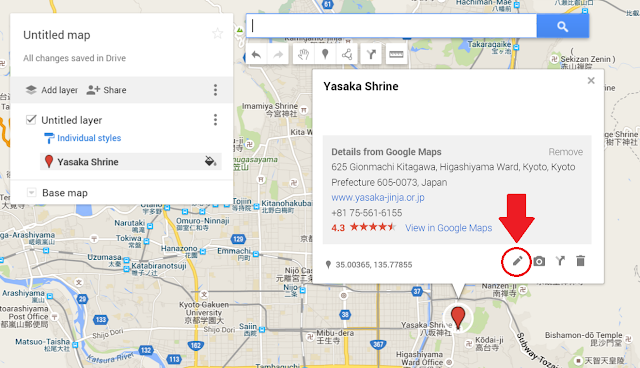
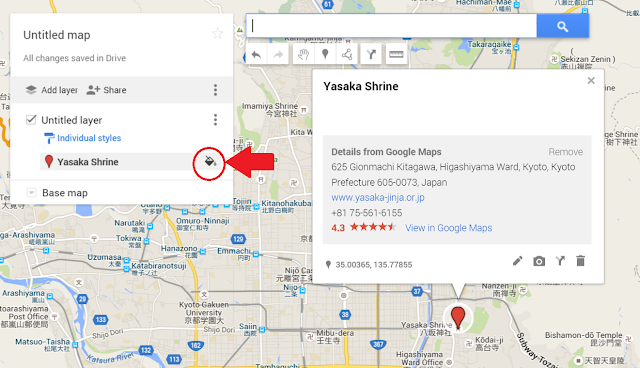
When you click on Create Map, it should open a new tab for you to work in. Now, you can just start searching for destinations by typing in the destination name (I always try this first!) or the address or GPS coordinates. Naturally, make sure the result matches what you are looking for, especially if might be multiple locations of a restaurant or multiple destinations called Yasaka Shrine for instance in Japan!
Guide to Planning A Trip: Mapping. When you click on Create Map, it should open a new tab for you to work in. Now, you can just start searching for destinations by typing in the destination name (if you're lucky) or the address or GPS coordinates.

Adding Destinations To Your Map

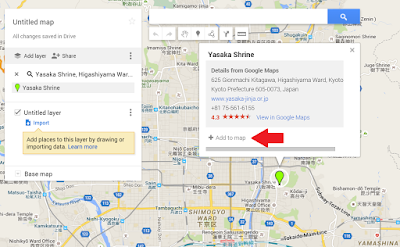
When the Google Maps search finds a destination, you can add it to a default Untitled Layer by clicking on “Add to map”
Guide to Planning A Trip: Mapping. When the Google Maps search finds a destination, you can add it to a default Untitled Layer by clicking on Add to map
Once you add it to the Untitled layer, feel free to name your Untitled map (such as Kyoto, which is the city here) and the Untitled layer if you want. I usually just use one layer because I don’t tend to need to organize too many destinations. But, you might choose to have one layer for Restaurants, one layer for Museums, one layer for Hikes, etc. if you have a lot of different categories you want to divide in.

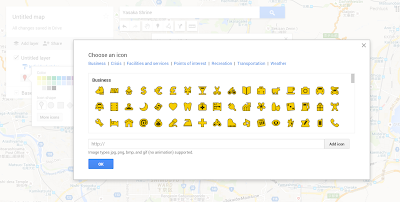
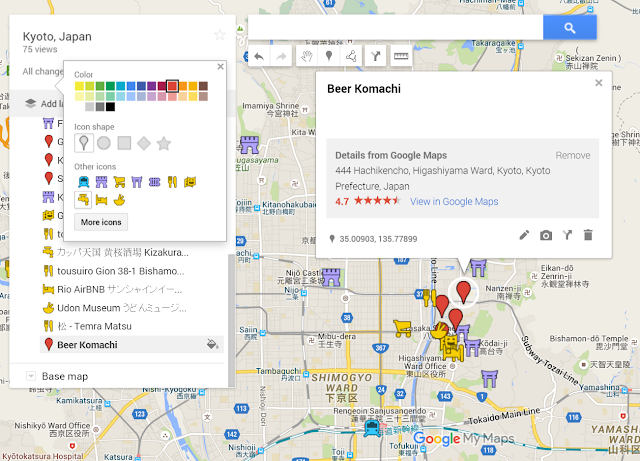
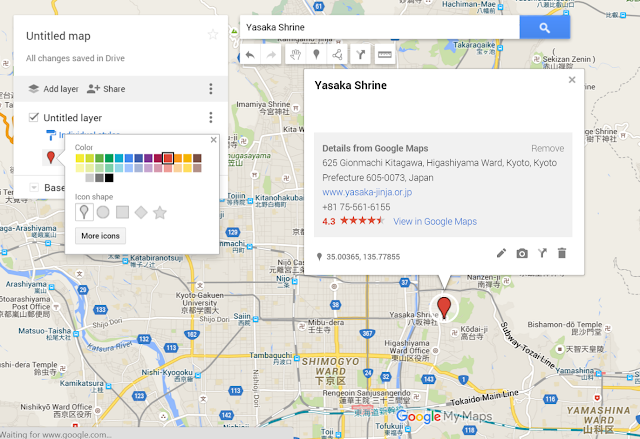
I personally like to keep it in one layer because I’m too lazy to want to click between layers. Instead, I use customizing icons to differentiate between the different places by clicking on the paint icon when you mouse over the new pin you have added.
Guide to Planning A Trip: Mapping. I use customizing icons to differentiate between the different places by clicking on the paint icon when you mouse over the new pin you have added.

Instead of changing colors of pins, I select “More icons” button at the bottom.
I use customizing icons to differentiate between the different places by clicking on the paint icon when you mouse over the new pin you have added.

Then I pick a bed to stand for my lodging, train for train station, fork/knife for restaurant, faucet for beer places, etc! There are lots of different icons you can use here, or you can even add your own icon you have an url to grab. Pick something that is meaningful that you will remember.
I use customizing icons to differentiate between the different places by clicking on the paint icon when you mouse over the new pin you have added.

I usually don’t end up using too many icons and thankfully the application remembers your most used other icons so you can quickly get to them again later!
I use customizing icons to differentiate between the different places by clicking on the paint icon when you mouse over the new pin you have added.

If you searched by an address or GPS, you can edit the resulting destination to a name that means something to you, such as “Beginning of XXX Hiking Trail” or even edit details in the description if you’d like by adding an url, comments, etc.
When adding a destination to your custom Google My Maps, you can edit the resulting destination with a name or additional comments and such that are helpful to you

Using Your My Maps

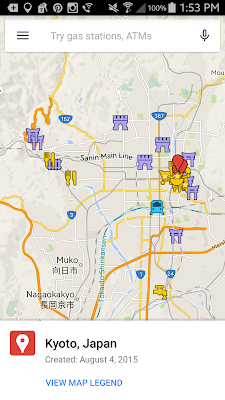
I can only speak to my Android where when I open Google Maps, I can choose “Your Places“, which is the equivalent of the My Maps on the desktop and I can pick what I want to open based on my map name (such as Kyoto, Tokyo, etc.”. This then loads up the map.
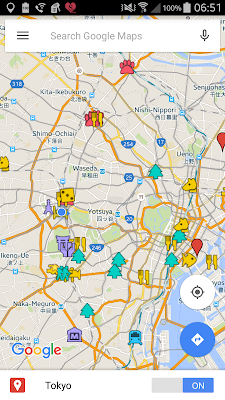
Looking at my custom Google My Maps on my Maps app on my Android phone

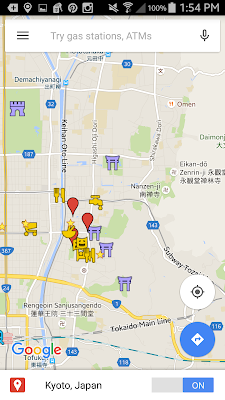
I can zoom in to click on any of my destinations I have placed (as well as search for new ones if I’m online still) then use the directions icon (in the bottom right of the screen, it’s the arrow button) to navigate myself there via car, public transit or walking.
Looking at my custom Google My Maps on my Maps app on my Android phone

The few times I used taxis, the My Map turned out helpful to even show the driver the general area we needed to go since they could be unfamiliar with the street address. And even with my data turned off, I used the GPS to make sure I was on track even as we wandered our way exploring the neighborhoods on the way from one destination to the other walking.
Looking at my custom Google My Maps on my Maps app on my Android phone

Using My Maps was also great in giving me a visual overview of where all the various places I am interested in are located. Based on this, I pick my lodging to be convenient to getting to everything, or to be in the heart of where there are a lot of restaurants, etc. It also helped narrow some things off my wishlist because they were too out of the way.
Looking at my custom Google My Maps on my Maps app on my Android phone

When I’m on the go on vacation, this pre-work on a computer saved me the annoyance of trying to search and find places on my phone. This pre-work also gives you an initial orientation to your destination so that you know where various things are in location to each other in the city!

I’ve also used this to craft a progressive meal in New York, and a drinking/nightclub crawl in Montreal. While I may only make a travel Google Doc spreadsheet for a trip of 5 days or more, I make custom Google Maps all the time even for a day trip to map stops to see, eat, and drink even for a single day.

Have you ever made a custom Google Map? How do you plan the locations you visit in a day on a trip? Do you think I’m crazy?

Here’s a summary of my Japan Travel post series:

Signature